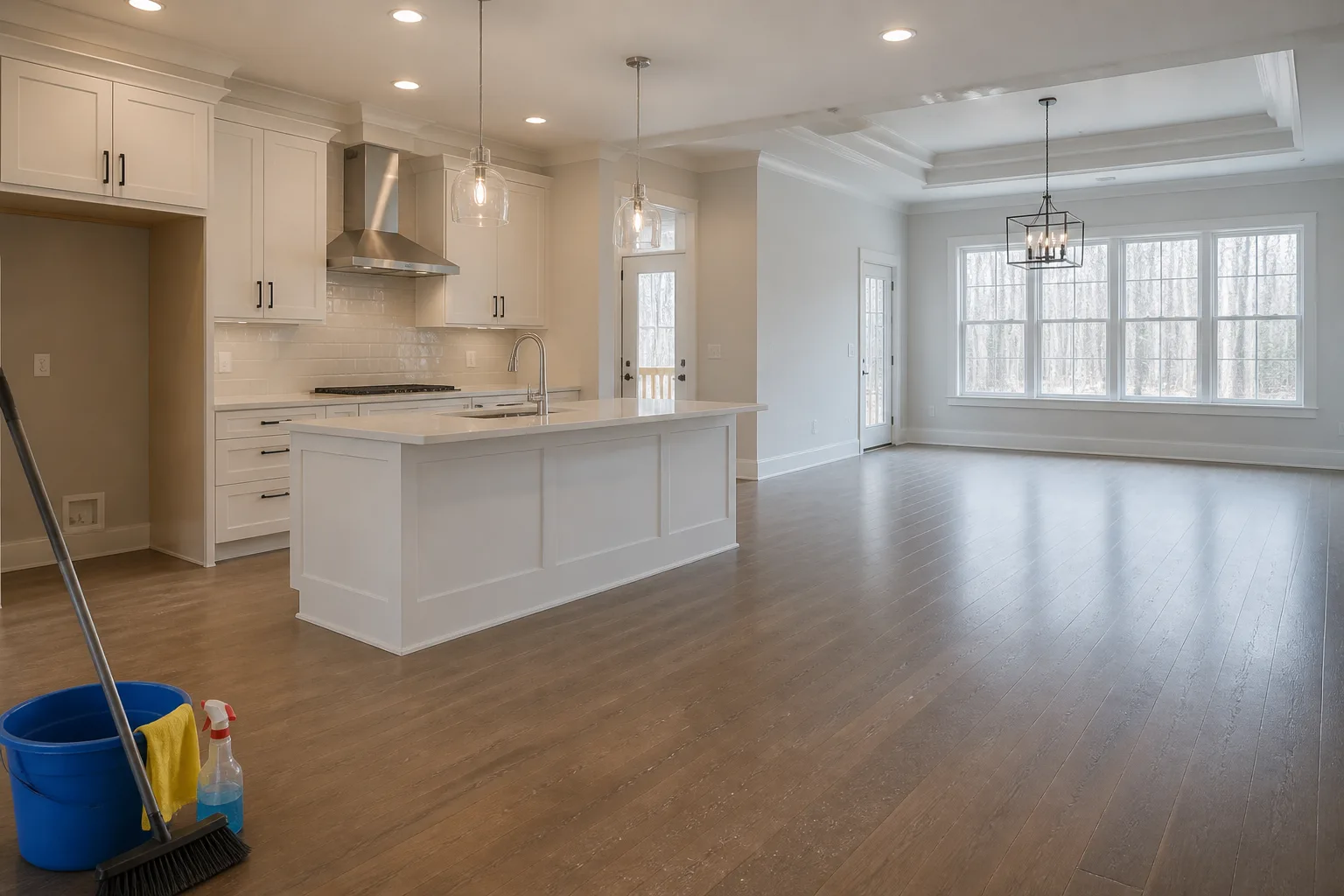
A newly built or recently renovated home can look finished while still containing fine dust, adhesive residue, fingerprints, packaging fragments, and marks from the final stages of work. Cleaning before boxes and furniture arrive gives you better access to floors, cabinets, closets, trim, and other surfaces that will soon be covered.
For homebuyers and property professionals in the Nashville area, the key is sequencing. The home should be far enough along that cleaning will not be undone by another round of sanding, drilling, painting, fixture installation, or contractor traffic. At the same time, the clean should happen early enough to allow an inspection and any necessary follow-up before move-in day.
This guide explains how to plan new construction move-in cleaning in Nashville, define an appropriate scope, and avoid treating unfinished construction work as a cleaning task.
Confirm that construction work is actually complete
Before arranging a move-in clean, ask the builder, project manager, seller, or renovation contractor whether any work remains. A home may have passed an important project milestone while still having an active punch list.
Look for planned work involving:
- Drywall sanding or patching
- Interior painting and touch-ups
- Flooring installation or repair
- Cabinet, countertop, or backsplash work
- Plumbing and electrical fixtures
- Appliance delivery or installation
- Door and hardware adjustments
- Caulking, grout, or sealant
- Final inspections or trade visits
Dust-producing and high-traffic work should generally happen before the final cleaning. Otherwise, recently cleaned floors and surfaces may need attention again. If a contractor must return, clarify where that person will work and whether a smaller touch-up clean will be needed afterward.
Distinguish move-in cleaning from construction cleanup
A move-in cleaning plan should not assume that removal of construction materials or heavy job-site debris is included. Before requesting service, inspect the property for materials that may require the builder, contractor, or another appropriate provider.
Examples include:
- Scrap lumber, tile, drywall, or flooring
- Buckets, chemicals, tools, and equipment
- Large quantities of cardboard or protective wrapping
- Nails, screws, blades, or other sharp objects
- Heavy adhesive, paint, grout, or caulk residue
- Blocked rooms or surfaces covered for ongoing work
- Materials requiring special handling or disposal
Ask the responsible project contact to remove job-site materials and confirm that walking areas are accessible. Cleaning providers should receive an accurate description of the remaining dust and residue rather than discovering an active work area on arrival.
Document the home before cleaning
Take dated photos before the cleaning begins. Capture a wide view of each room and close-ups of anything that may be damage, incomplete work, or stubborn residue.
A useful record can include:
- Scratches, chips, dents, or cracks
- Paint drips or overspray
- Adhesive on glass, cabinets, or flooring
- Missing hardware or unfinished trim
- Loose fixtures or visible leaks
- Grout, caulk, or sealant concerns
- Dust inside cabinets and closets
- Labels or protective films still attached to surfaces
Documentation helps separate cleaning needs from builder punch-list items. It also reduces the chance that a cleaner will be asked to decide whether a mark is removable residue, a material defect, or physical damage.
Do not remove labels, protective film, tape, or manufacturer information until ownership and warranty questions have been resolved. If an item should stay in place, identify it clearly in the service notes.
Build the scope room by room
A written scope is more useful than a general request to “clean the new house.” Describe the property, name the priority rooms, and specify any interiors or detailed surfaces that should be considered.
For a service-level reference, the move-in cleaning checklist focuses on reachable surfaces, floors, visible trim, high-touch areas, kitchens, and bathrooms.
Kitchen
New kitchens can collect dust in places that are not obvious during a quick walkthrough. Review:
- Counters and backsplash surfaces
- Sink, faucet, and surrounding edges
- Cabinet and drawer fronts
- Requested cabinet and drawer interiors
- Reachable shelves
- Appliance exteriors
- Appliance interiors, if requested and appropriate
- Pantry floors and shelves
- Baseboards and accessible floor edges
- Labels, film, or installation residue that should remain untouched
Confirm the cleaning restrictions for stone, wood, painted cabinetry, stainless steel, and specialty finishes. Product assumptions can create unnecessary risk on unfamiliar materials.
If appliances have not arrived, decide whether cleaning should happen before delivery, after installation, or in two stages. Installation crews may bring packaging and create new dust or footprints.
Bathrooms
Inspect each bathroom under good lighting. Priorities may include:
- Tubs, showers, and surrounds
- Toilets, vanities, sinks, and counters
- Mirrors and fixtures
- Cabinet fronts and requested interiors
- Floors, corners, and trim
- Dust on reachable vents or ledges
- Visible grout or construction residue
- Labels or protective materials awaiting approval for removal
Report loose fixtures, damaged caulk, active leaks, drainage problems, or incomplete grout work to the appropriate project contact. Cleaning should not be used to conceal or work around an unresolved maintenance issue.
Bedrooms, living areas, and closets
These areas may appear empty and clean while fine dust remains along edges and horizontal surfaces. Check:
- Window ledges and reachable tracks
- Baseboards and visible trim
- Closet shelves, rods, and floors
- Doors, handles, and switch plates
- Built-in shelves and cabinets
- Hard floors and carpeted areas
- Corners, stairs, and landings
- Ceiling fans and reachable fixtures
If windows, tracks, high fixtures, or specialty surfaces are priorities, mention them explicitly. Do not assume every detailed or elevated task is part of a standard scope.
Entry, utility, and storage areas
Garages, utility rooms, mudrooms, and storage spaces are easy to overlook. Decide whether they are part of the requested cleaning and whether they are sufficiently clear of equipment and materials.
Also identify any mechanical panels, unfinished areas, or contractor-only spaces that should not be touched. Access boundaries should be communicated before work starts.
Decide whether the home needs more detailed attention
Not every newly completed home has the same condition. A straightforward move-in clean may be appropriate when the property is empty, accessible, and free of active construction. More detailed attention may be worth discussing when dust or buildup remains across multiple rooms or surfaces.
The deep cleaning service is described as detailed attention to buildup, corners, baseboards, kitchen and bathroom areas, and other easy-to-miss spaces.
When requesting a quote, explain what you observed rather than selecting a scope based only on the age of the home. Photos can help show the difference between ordinary settled dust, widespread fine residue, and unfinished contractor work.
Protect unfamiliar finishes
New homes may contain a combination of engineered flooring, natural stone, painted cabinetry, specialty tile, metal fixtures, and manufacturer-coated appliances. Gather any available care instructions before cleaning.
Include notes about:
- Prohibited products or methods
- Floors that should not be saturated
- Stone or tile requiring specific care
- Fresh paint or recently cured finishes
- Cabinets with special coatings
- Fixtures that scratch easily
- Areas the builder wants left untouched
When the correct method is uncertain, pause and confirm instead of testing an aggressive product in a visible location. The objective is to prepare the home without creating a new punch-list problem.
Coordinate access and utilities
Send complete access details before the appointment. For a newly completed development, entry may involve a gate, lockbox, construction entrance, parking restriction, or coordination with an on-site representative.
Confirm:
- The complete address and unit number
- Parking and entry instructions
- Key, code, lockbox, or front-desk procedures
- Which person is authorized to provide access
- Rooms that are off-limits
- Whether water and electricity are available
- Whether heating or cooling is operating as needed
- Whether another crew will be present
- The next scheduled activity at the property
- An on-site contact and a backup contact
Avoid broadly sharing permanent entry codes. Use the approved access method for the property and update temporary credentials when appropriate.
Keep cleaning and repair lists separate
The pre-move walkthrough may reveal loose hardware, gaps in caulk, minor wall marks, or fixtures that need adjustment. Record these items separately from dust and surface cleaning.
The basic handyman service covers minor repairs, simple replacements, caulking, touch-ups, and light maintenance tasks, with scope depending on the task, property, and availability.
Even when cleaning and small maintenance tasks are being considered around the same move, each repair should be described and confirmed separately. Larger, specialized, warranty-related, or regulated work should be directed to an appropriate provider.
Inspect before boxes arrive
Plan time for a final walkthrough after cleaning but before movers begin carrying items into the home. Use the written scope and your original photos as references.
Inspect in a consistent order:
- Start at the main entrance and move through one room at a time.
- Check floors, corners, trim, doors, and reachable horizontal surfaces.
- Open only the cabinets, drawers, and closets included in the scope.
- Review kitchens and bathrooms under adequate lighting.
- Note anything blocked by unfinished work or restricted access.
- Photograph the completed condition from the same general angles used before cleaning.
- Keep cleaning follow-up separate from builder or contractor punch-list items.
If movers, installers, or delivery teams arrive immediately after the cleaning, consider how floor protection and packaging will be managed. A clean home can quickly collect new debris during appliance, window-treatment, or furniture installation.
Information to include with a quote request
A clear request helps a provider understand the property before discussing scope. Include:
- Nashville-area location
- Property type and approximate layout
- Whether the home is newly built or recently renovated
- Whether it will be empty at the time of service
- Rooms and surfaces that need attention
- Requested cabinet, drawer, or appliance interiors
- Visible dust, labels, film, adhesive, paint, or grout residue
- Known finish restrictions
- Remaining contractor or installation visits
- Access and parking instructions
- Move-in date and the next scheduled activity
- Photos of representative rooms and problem areas
Avoid assuming that every new home requires the same checklist. A specific description supports a more useful conversation about what is cleaning, what is unfinished work, and what should remain untouched.
Make the final clean part of the move plan
The best time to clean a newly built or renovated home is after dust-producing work and debris removal but before furniture, boxes, and daily activity limit access. Confirm project completion, document the starting condition, define the scope by room, communicate finish restrictions, and leave time for a final inspection.
That sequence creates a clearer handoff among builders, property professionals, cleaning providers, movers, and occupants—and helps the new home start with fewer unresolved questions.
Moving into a new place in Nashville? Request a move-in cleaning quote and start fresh from day one.